
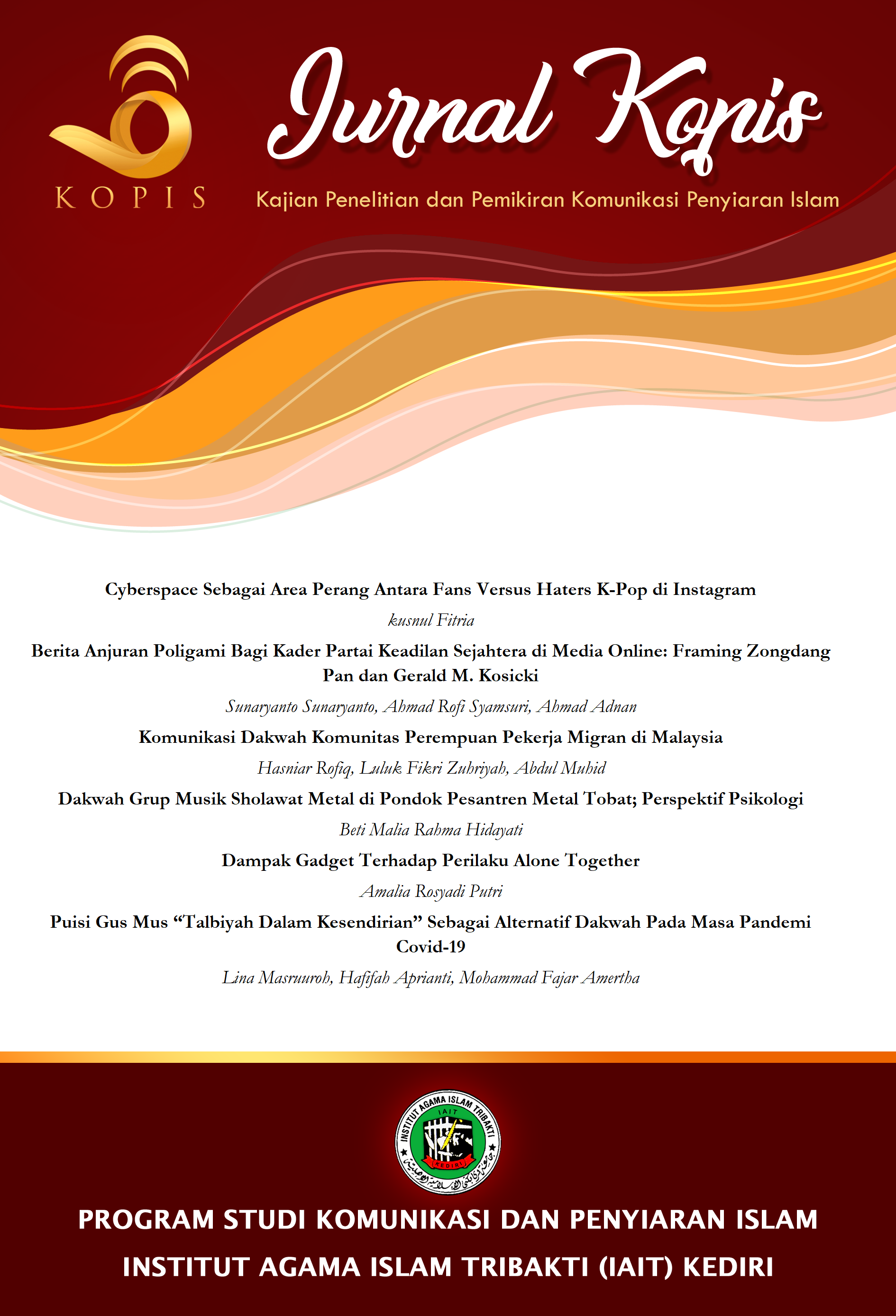
Dampak Gadget Terhadap Perilaku Alone Together
DOI:
https://doi.org/10.33367/kpi.v4i2.2309Keywords:
Alone Together, Impact, Gadget, behaviorAbstract
This article discusses the role of the device or gadget, which is the latest communication tool that must be owned by each individual in the new media era. Everyone's daily life is spent with gadgets that are equipped with all the features. It can answer every modern human need. Thus, gadgets have a significant impact, one of which is the attitude of being alone together. This research is a qualitative research that will reveal the impact of gadgets on the attitude of being alone together which indicates social and moral decadence. The results of this study indicate that gadgets have reduced social values ​​in which people communicate verbally and nonverbally. Social reality (not virtual reality) is the most important thing in building values ​​in society, but with this gadget telecommunication system, people are increasingly trapped in virtual reality. The construction of the alone together attitude is an attitude of unconsciousness where this is a form of abnormality, because what is called normality are those who can communicate face-to-face. This does not necessarily erase the presence of gadgets with all their positive impacts, but society must be able to balance the progress of the times with intelligent minds and religious points of view as well as religiosity and values ​​that are equally appropriate and also fill each individual's personal space.
References
Gordon C.B & Anand. K. Gadget lovers. J. of the Acad. Mark. Sci. (2007) 35:329–339 DOI 10.1007/s11747-007-0051-3.
Marpaung.J. (2018). The Effect of Use of Gadget in Life.Jurnal Kopasta 5 (2), 55-64.
Ita Musfirowati Hanika. (2015). Fenomena Phubbing DI Era Milenia. Jurnal Interaksi 4(1) hlm 42-51. Fakultas Ilmu Sosial dan Ilmu Politik Universitas Diponegoro
Chusna, P. A. (2017). Pengaruh Media Gadget Pada Perkembangan Karakter Anak. Dinamika Penelitian: Media Komunikasi Sosial Keagamaan, 17(2), 315–330.
Sugiyono.(2007). Statistika Untuk Penelitian (Revisi Terbaru). Alfabeta
Nasrullah. R. (2015). Media sosial Perspektif Komunikasi ,Budaya, dan Sosioteknologi. Bandung: Simbiosa Rekatama Media.
Narsiti, A.D.S & Purworini, D. (2018). Pembentukan Harga Diri: Analisis Presentasi Diri Pelajar SMA di Media Sosial. Jurnal Komunikasi, Vol. 10, No. 1, Hal 33 – 47.
Turkle, S. (2011). Alone Together: Why Expect More From Technology andLess From Each Other. New York: Basic Books.
Vera, N. (2016). Komunikasi Massa. Bogor: Penerbit Ghalia Indonesia.
West, R & Turner, L.H. (2008). Pengantar Teori Komunikasi:Analisis Dan Aplikasi. Buku 1 edisi ke-3 Terjemahan Maria Natalia Damayanti Maer. Jakarta: Salemba Humanika.
Setianingsih, E. S. (N.D.). “Gadget “Pisau Bermata Dua†Bagi Anak ? Seminar Pendidikan Nasional. Universitas Pgri Semarang.
Rachmawati, P., Rede, A., & Jamhari, M. (2017). Pengaruh Penggunaan Gadget Terhadap Hasil Belajar Mahasiswa Pendidikan Biologi Angkatan 2013 Fkip Untad Pada Mata Kuliah Desain Media Pembelajaran. E-Jip Biol, 5(1), 35–40.
Ahmadi, A. (2003). Psikologi Umum. Jakarta. Pt. Asdi Mahasatya.
Ameliola, S., Nugraha, D. (2013). Perkembangan Media Informasi Dan Teknologi Terhadap Anak Dalam Era Globalisasi. Universitas Brawijaya.
Nuha, A.A.U & Subahri, B. (2020). Deotoritasi Guru di Era New Media. Bidayatuna: Jurnal Pendidikan Guru Mandrasah Ibtidaiyah, Vol. 03 No. 02 Oktober 2020.
Subahri, B. (2019). Pengaruh Nilai-Nilai Agama Dan Kecerdasan Moral Terhadap Prestasi Belajar Afektif. Dakwatuna: Jurnal Dakwah dan Komunikasi Islam. Volume 5, Nomor 2, Agustus 2019
 Abstract
Views:
649,
Abstract
Views:
649,  PDF downloads: 915





